this article outlines the key security and compliance strategies for quanta cloud servers in the taiwanese environment, as well as feasible operation and maintenance monitoring practices, helping enterprises to build an observable, traceable and quickly responsive cloud operation and maintenance system while meeting regulatory and audit requirements.
first, compare relevant taiwanese and international regulations (such as local privacy protection regulations and general data protection standards), establish a compliance matrix, and clarify data classification, retention period, and cross-border transfer restrictions. implement stricter encryption and access controls for sensitive or personal data, and use centralized audit logs to ensure traceability. compliance assessment should combine third-party audits and internal control testing to ensure a complete chain of evidence.
vpc, subnet layering and security group policies are used in the architecture to isolate the management plane, application plane and database partitions to avoid horizontal diffusion. externally exposed services are placed in a controlled dmz or load balancing layer, and the attack surface is reduced through waf, ddos protection and intrusion detection (ids/ips). sensitive resources are placed on private subnets and accessed through springboard hosts and bastion hosts to ensure auditable management access.
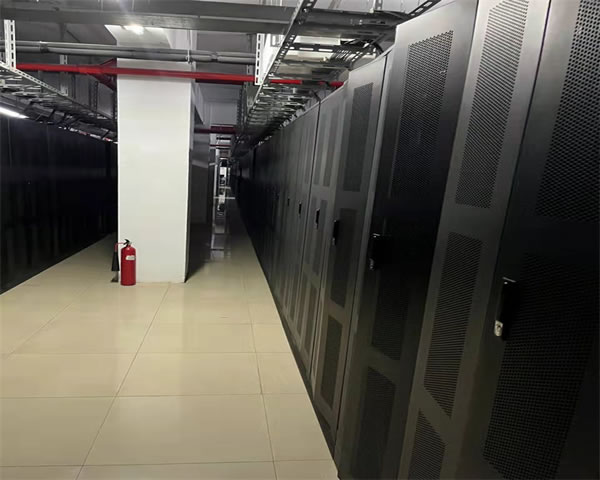
single protection is easy to be circumvented, and multi-layer protection (network layer, host layer, application layer and data layer) can form a mutually compensating security chain. fully enable encryption of static data and transmitted data, combine kms or hsm for key management, and implement key rotation and least privilege principles for key operations to reduce leakage risks and meet compliance requirements.
use role-based access control (rbac) or attribute-based access control (abac), combined with multi-factor authentication (mfa) and temporary credentials (such as short-term sts) to reduce long-term credential exposure. enable fine-grained auditing and command playback records for key operations, periodically review permissions, and automatically deactivate inactive accounts to ensure that permissions are aligned with actual responsibilities.
core monitoring includes availability (cpu, memory, disk i/o, network latency), business indicators (response time, error rate) and security logs (login failure, abnormal traffic, configuration changes). combine the centralized log platform and siem to conduct correlation analysis, set hierarchical alarms and alarm suppression strategies, and ensure that high-priority events are notified in a timely manner with necessary context.
it is recommended that vulnerability scanning and automated dependency detection be performed at least weekly. critical systems should respond immediately and arrange emergency patches when high-risk vulnerabilities are discovered. regular patch strategies can be released on a monthly rolling basis; disaster recovery and emergency drills are recommended to be conducted once a quarter on a small scale and once a year on a full-scale practical exercise to verify whether the recovery time (rto) and recovery point (rpo) are up to standard.
use infrastructure as code (iac) to manage environmental consistency, and combine with ci/cd pipelines to implement configuration change review and automatic rollback. establish a standardized runbook and automated scripts (such as automatic expansion, fault isolation, snapshots and rollbacks), link alarms with the work order system, clarify responsible persons and slas, and ensure closed-loop traceability from detection to recovery.
- Latest articles
- Analysis Of The Role And Implementation Plan Of Alibaba Cloud Vietnam Servers In The Company's Overseas Strategy
- Network Latency And Bandwidth Issues That Need To Be Paid Attention To When Renting A Server In South Korea And The United States
- How To Determine What Type Of Low-priced Cloud Server In Japan Can Meet Business Needs
- An Inventory Of Applicable Business Scenarios Recommended By Japan Cn2 From The Perspective Of Delay Stability
- Compliance Risk Compliance Suggestions For Taiwan’s Native Residential Ip In Advertising And Risk Control
- An Inventory Of The Advantages Of American Site Group Servers From The Perspective Of Marketing Promotion
- Comparison Of Measured Network Stability And Packet Loss Rates Between Korean Servers And Hong Kong Servers At Different Time Periods
- The Impact Of Long-term Subscription And On-demand Billing On Japanese Cn2 Prices And Comparison Methods
- A Quick Tutorial On Setting Up A Demo Environment And Using Vps Hong Kong Hosting Free Plan
- The Official Website Of Cera In The United States Does Not Have The Potential Impact Of Cn2 On The Access Experience Of Global Users.
- Popular tags
-

Taiwan Server Recommended By Guangcom Cloud And Its Performance Analysis
this article evaluates the taiwan server recommended by guangsuan cloud in detail, including performance analysis and cost-effectiveness evaluation, providing reference for users to choose servers. -
Detailed Explanation Of The Top Ten Cloud Server Rankings In Taiwan To Help You Find The Best Choice
this article details the top ten cloud server rankings in taiwan to help you find the most suitable service provider. -

Performance And Stability Evaluation Of Taiwan Cloud Space Servers
This article provides a detailed evaluation of the performance and stability of Taiwan's cloud space servers, including practical operation step-by-step guides to help users choose the appropriate server.